West Side Rag
  • TOP NEWS
  • OPEN/CLOSED
  • FOOD
  • SCHOOLS
  • OUTDOORS
  • REAL ESTATE
  • ART & CULTURE
  • POLITICS
  • COLUMNS
  • CRIME
  • HISTORY
  • ABSURDITY
  • ABOUT US
    • OUR STORY
    • CONTRIBUTORS
    • CONTACT
    • GET WSR FREE IN YOUR INBOX
    • SEND US TIPS AND IDEAS
West Side Rag
No Result
View All Result
SUPPORT THE RAG
No Result
View All Result

Favorite WSR Stories

  • UWS Church Raises Over $200,000 for 107th Street Fire Victims: ‘Everyone Lost Everything’
  • Owner of Pit Bulls that Attacked Penny the Chihuahua on UWS in May is Arrested in NY Courtroom
  • This Giving Tuesday Help Sustain West Side Rag
Get WSR FREE in your inbox
SUPPORT THE RAG

History: Bloomingdale, ‘A Place to Gather Firewood and Hunt’

January 30, 2024 | 9:46 AM
in HISTORY
4
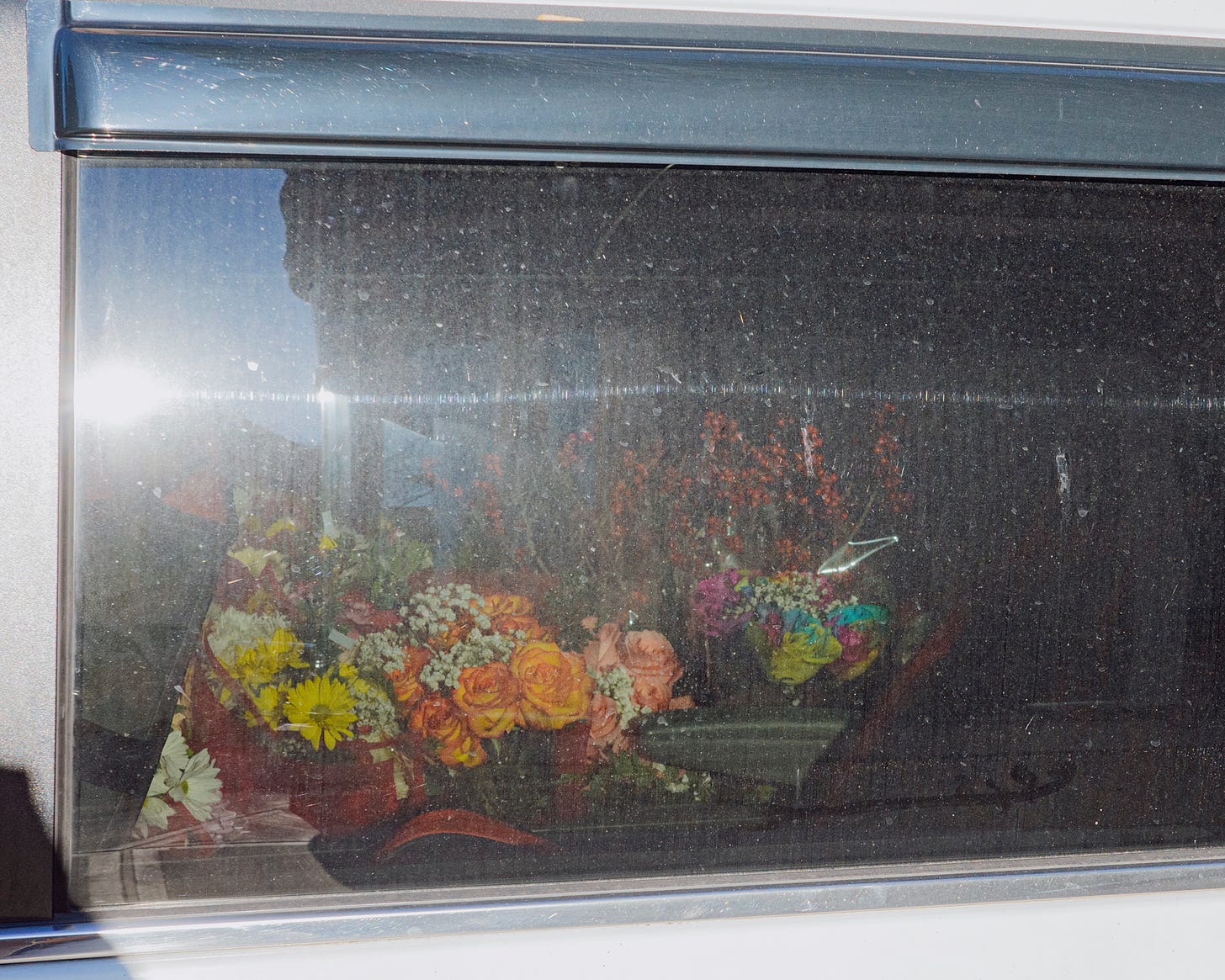
“Valley of flowers.” Photos courtesy of Rob Stephenson.

By Rob Stephenson

In Colonial times, the entire west side of Manhattan, from at least 42nd Street to Morningside Heights, was known as the Bloomingdale District. The name, Dutch for “valley of flowers,” originated in the late 1600s when the area was mostly forest and farmland, a place for people living in nearby Harlem to gather firewood and hunt. There is a Bloemendahl situated just west of Haarlem in Holland, so the name is most likely a geographical rhyme rather than an homage to the region’s abundant flora.

Still, in Knickerbocker’s History of New York, Washington Irving did make it sound like a rather idyllic place.

A sweet rural valley, beautiful with many a bright flower, refreshed by many a pure streamlet, and enlivened here and there by a delectable little Dutch cottage, sheltered under some sloping hill; and almost buried in embowering trees.
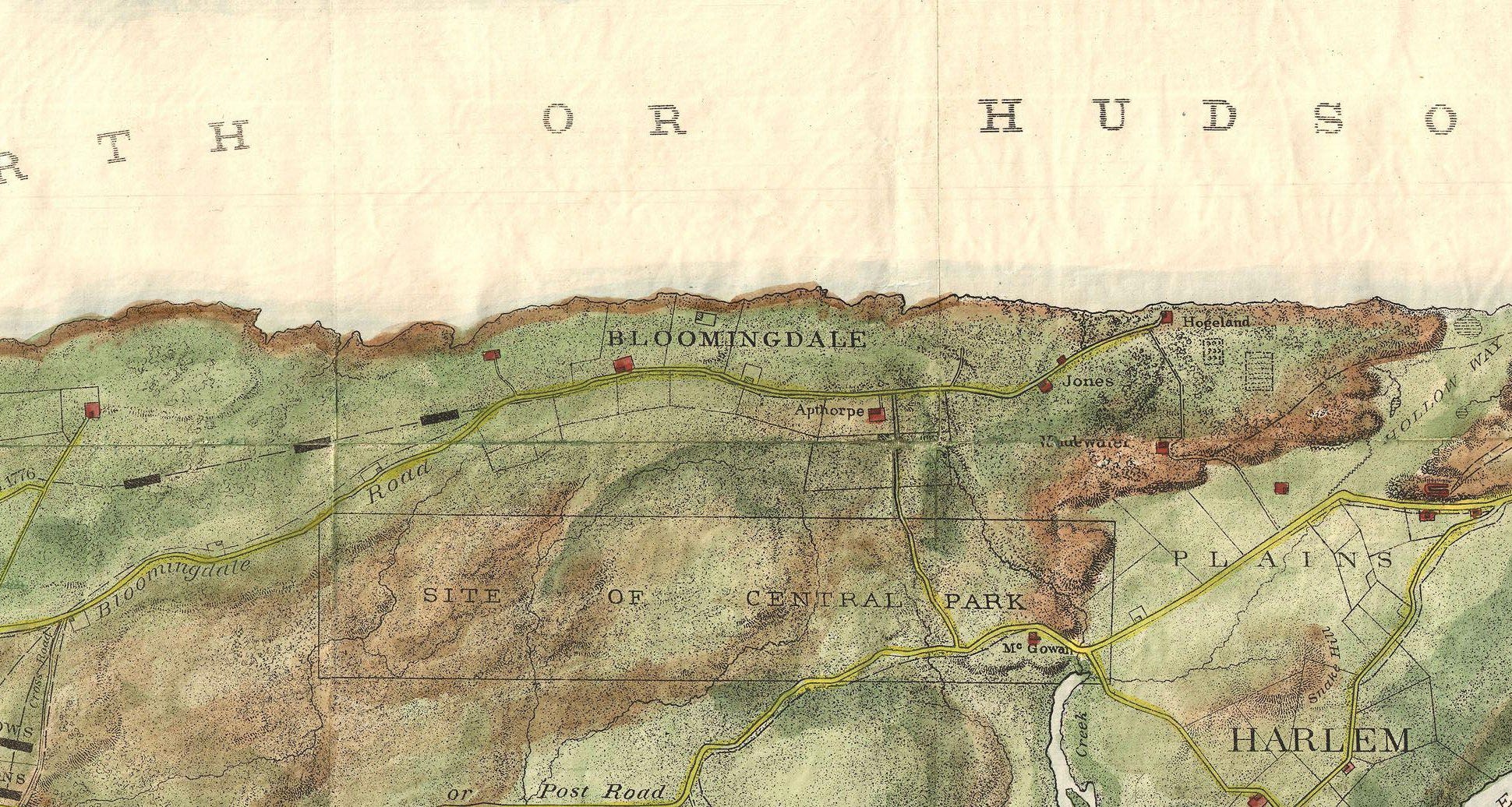
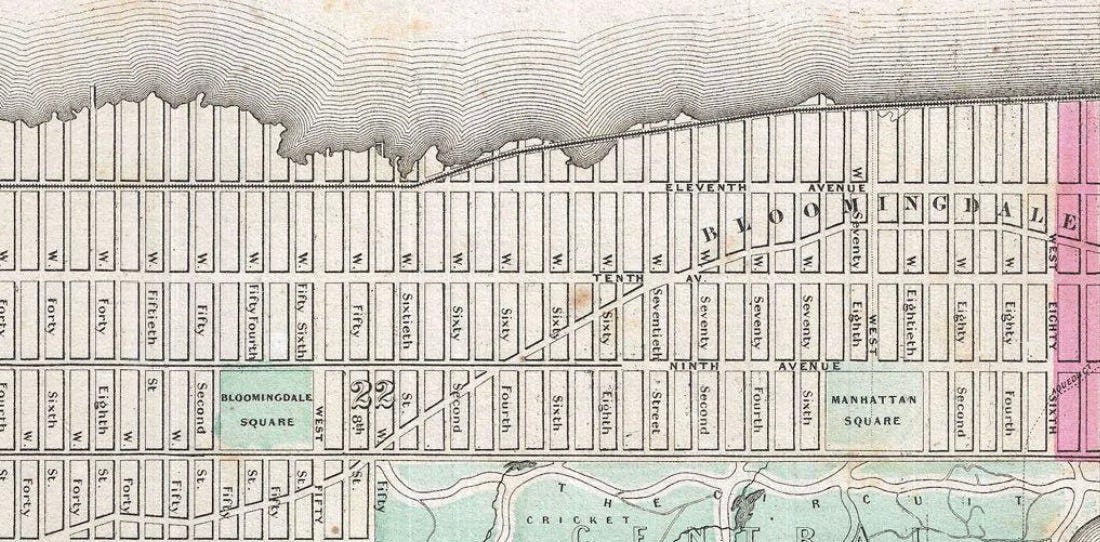
Map of the old Bloomingdale.
When the British assumed control of New Amsterdam, they anglicized the name to Bloomingdale and in 1708, following the contours of an existing Lenape trail, they built the Bloomingdale Road. Irving’s delectable little cottages were soon replaced by large country estates for New York’s wealthy.
Bloomingdale Road becomes Broadway.
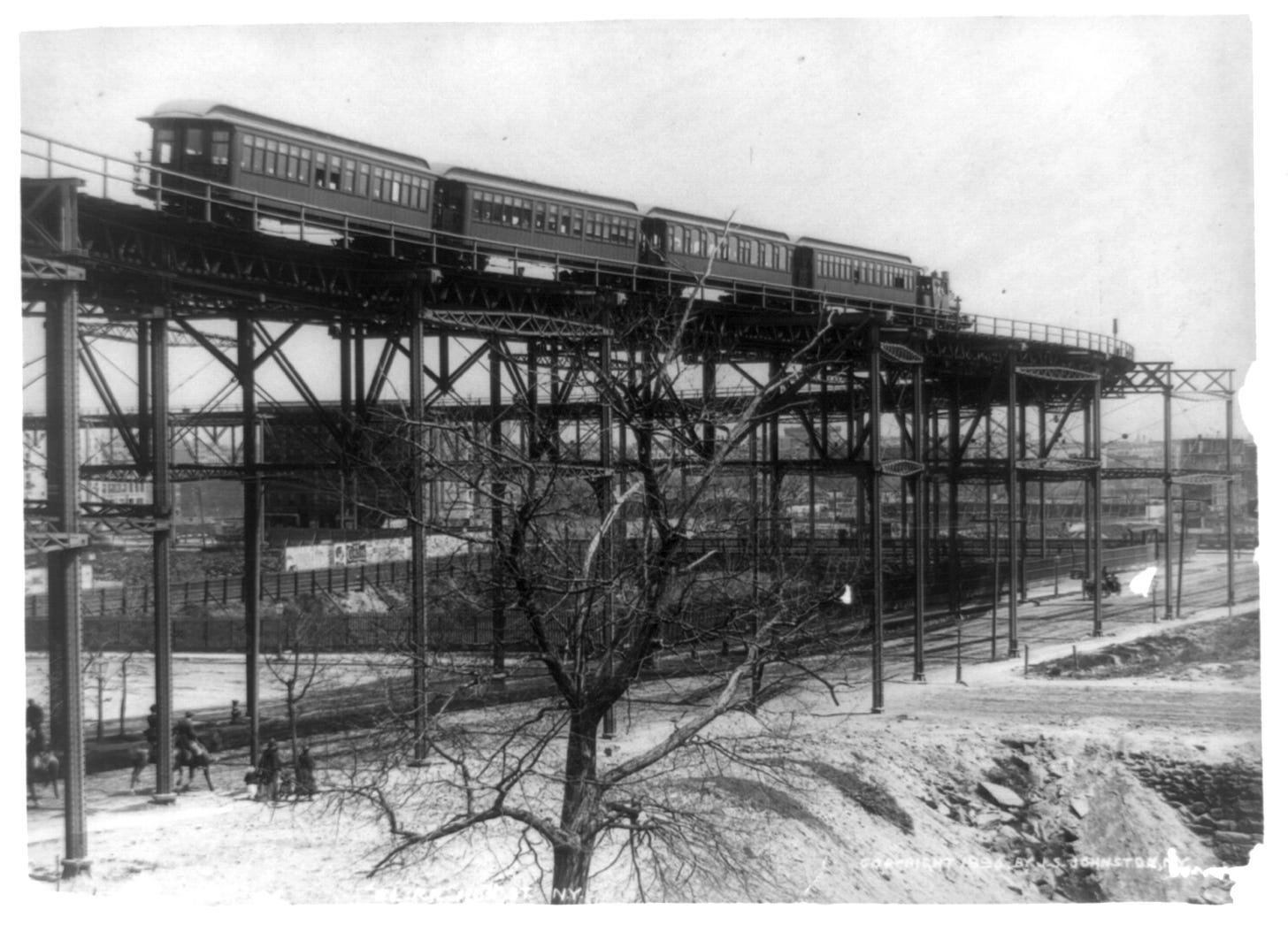
In 1868, the meandering Bloomingdale road was subsumed into Broadway, a tamer, wider route that played nice with Manhattan’s newly imposed street grid. A few years later, the completion of the Ninth Avenue Elevated train led to a boom in residential construction.
The Elevated approaching “suicide curve” at 110th Street.

Today, Bloomingdale‘s boundaries form a tidy rectangle, from 96th to 110th Streets between Central Park and the Hudson River.
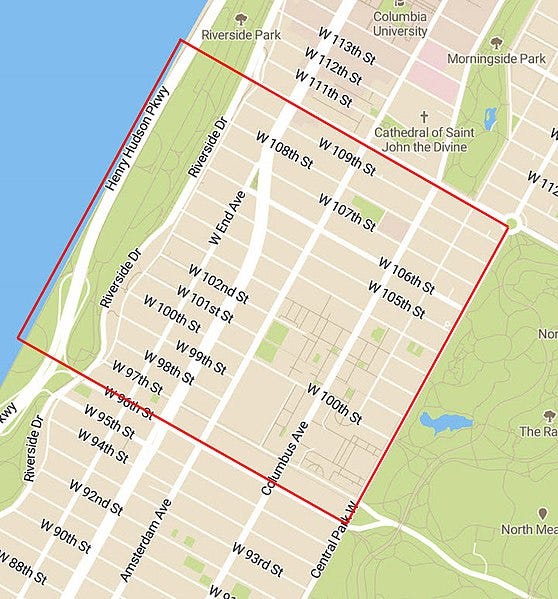
File:Bloomingdale Neighborhood of Manhattan.jpg
Bloomingdale Neighborhood today.

While many (most) New Yorkers have never even heard of Bloomingdale, the neighborhood’s current borders are defined by the Bloomingdale Neighborhood History Group, the most ardent, well-organized neighborhood boosters I have ever encountered. They have documented every building, corner, and notable neighborhood resident, and even have videos of themselves walking Bloomingdale’s streets dressed as farmers, George Washington and Humphry Bogart. If anyone has an issue with the neighborhood being called Bloomingdale, you should bring it up with them. But you better come prepared because they Do. Not. Play.

Manhattantown

In 1905, real estate entrepreneur Philip Payton Jr., known as the “father of Harlem,” bought several buildings on 98th and 99th streets between Columbus Avenue and Central Park West and, for the first time, made apartments in the predominately white neighborhood available to black New Yorkers. The two blocks were home to several notable figures, including James Weldon Johnson, Arturo Schomburg, Marcus Garvey, and Billie Holiday.

The 1949 Housing Act, signed into law by Harry Truman, provided loans to cities for “urban renewal.” Title I authorized federal grants and loans to cities, giving them the green light to raze slums through eminent domain and then offer the newly cleared land at discounts to private developers to build new housing.

In 1951, six blocks, including West 98th and 99th, were declared a slum by the then chairman of the New York City Committee on Slum Clearance, Robert Moses. The residents, who by all accounts loved their community, were told they would have to leave.

Moses’ “slum.”

Unbelievably, this photo of 99th St was included in Moses’ Slum Clearance report as evidence of the neighborhood’s blighted condition.

Moses facilitated the sale of the land to his crony, Samuel Caspter, for 1 million dollars down, even though the declared value was over $15 million. The deal stipulated that Caspter was responsible for demolishing and redeveloping the site – to be called Manhattantown – but he did nothing but collect rent from the remaining tenants while letting the buildings fall into disrepair. After five years, the city took back the site and transferred the development rights to William Zeckendorf, who you may remember was the developer behind the short-lived Freedomland in Co-op City.

Eventually, the buildings were demolished, and Park West Village and the Frederick Douglas houses were built in their place.
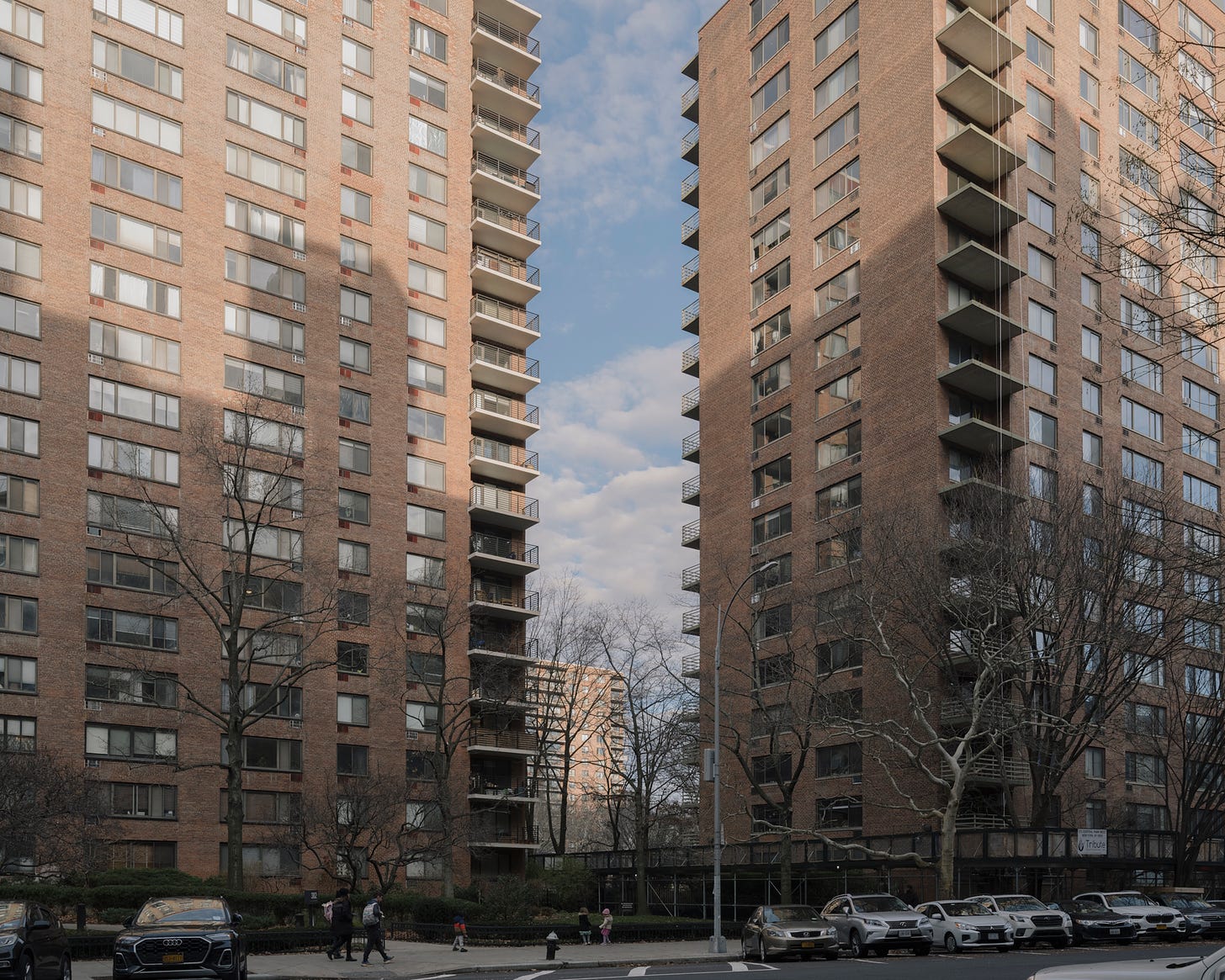
Park West Village.

Former 98th and 99th Street residents refer to their blocks as “The Old Community” and still have annual reunions to talk about the old neighborhood.

I learned much of this from a small, but information-rich exhibit on the Old Community up now at the Bloomingdale branch of the New York Public Library. This video, featuring interviews with former residents and Robert Moses’ biographer, Robert Caro, does a great, succinct job of telling the story of the Old Community

To read the rest of Rob Stephenson’s fascinating history, click HERE.

Subscribe to WSR’s free email newsletter here.
Share this article:
SUPPORT THE RAG
Leave a comment

Please limit comments to 150 words and keep them civil and relevant to the article at hand. Comments are closed after six days. Our primary goal is to create a safe and respectful space where a broad spectrum of voices can be heard. We welcome diverse viewpoints and encourage readers to engage critically with one another’s ideas, but never at the expense of civility. Disagreement is expected—even encouraged—but it must be expressed with care and consideration. Comments that take cheap shots, escalate conflict, or veer into ideological warfare detract from the constructive spirit we aim to cultivate. A detailed statement on comments and WSR policy can be read here.

guest

guest

This site uses Akismet to reduce spam. Learn how your comment data is processed.

4 Comments
Inline Feedbacks
View all comments
Coco
Coco
1 year ago

I love to read about the history of my neighborhood!

2
Reply
Elle
Elle
1 year ago

Love this! Dove right into the rest of Rob Stephenson’s insightful history, humorous antics, and great photos! Incredible how many neighborhoods he has covered – I’ve signed-up for more.

1
Reply
AnnieNYC
AnnieNYC
1 year ago

Thank you for this informative and touching account of the neighborhood and the history of the remarkable and ever-changing city we call home … including of the injustices that it inflicted, almost always in the name of greed, on supposed ‘slums’ (as we know was also done in the creation of Central Park and the erasure of Seneca Village). The small but effective exhibit in the Bloomingdale Library (100 Street between Columbus and Amsterdam), is very very worth a stop to pause and ponder.

3
Reply
Kate Garretson
Kate Garretson
1 year ago

And when was the name Manhattan Valley coined? Why?

1
Reply

YOU MIGHT LIKE...

Openings & Closings: Telio’s; Saperavi; Runaway Poppy; Blank Street Coffee; The Cashmere Sale; Pressed Juicery; Playgarden Prep
COLUMNS

Openings & Closings: Telio’s; Saperavi; Runaway Poppy; Blank Street Coffee; The Cashmere Sale; Pressed Juicery; Playgarden Prep

December 17, 2025 | 8:40 AM
The New York Historical’s $175 Million Tang Wing on the UWS Takes Shape: A First Look
ART

The New York Historical’s $175 Million Tang Wing on the UWS Takes Shape: A First Look

December 16, 2025 | 3:27 PM
Previous Post

Here’s the Dish: The Expat’s Singapore Noodles

Next Post

Upper West Side 1-Train Subway Station Gets Repairs and a Deep Cleaning

this week's events image
Next Post
Upper West Side 1-Train Subway Station Gets Repairs and a Deep Cleaning

Upper West Side 1-Train Subway Station Gets Repairs and a Deep Cleaning

Heroic Mail Carrier Saves Mail and Nails Mail Thief

Heroic Mail Carrier Saves Mail and Nails Mail Thief

Shoplifting Incidents Hit Both Ends of the Upper West Side: Is it a Trend for the Start of 2024?

Shoplifting Incidents Hit Both Ends of the Upper West Side: Is it a Trend for the Start of 2024?

  • ABOUT US
  • CONTACT US
  • NEWSLETTER
  • WSR MERCH!
  • ADVERTISE
  • EVENTS
  • PRIVACY POLICY
  • TERMS OF USE
  • SITE MAP
Site design by RLDGROUP

© 2025 West Side Rag | All rights reserved.

No Result
View All Result
  • TOP NEWS
  • THIS WEEK’S EVENTS
  • OPEN/CLOSED
  • FOOD
  • SCHOOLS
  • OUTDOORS
  • REAL ESTATE
  • ART & CULTURE
  • POLITICS
  • COLUMNS
  • CRIME
  • HISTORY
  • ABSURDITY
  • ABOUT
    • OUR STORY
    • CONTRIBUTORS
    • CONTACT US
    • GET WSR FREE IN YOUR INBOX
    • SEND US TIPS AND IDEAS
  • WSR SHOP

© 2025 West Side Rag | All rights reserved.